
What is this?

Shō connects you to the same databases scientists and doctors use every day.

PubMed. PubChem. ClinicalTrials.gov. OpenFDA. ClinVar. GTEx. UniProt. AlphaFold. gnomAD. OpenTargets.

Real research databases. Plain English. One screen.
Why does it exist?

Research exists. Finding it just got easier thanks to AI.

Clinical trials, drug safety reports, genetic data — it's all publicly available. But the tools to access it were built for scientists, not for patients or families trying to understand a diagnosis.

Shō bridges that gap.
How does it work?

You search. Answers come straight from the source.

Every tool connects directly to research databases. Nothing is stored. Nothing is made up. Results are translated into readable language.

Built by the LINCHPIN AI Innovation Lab — guided by the principle that AI should serve human dignity first.
Why now?

Google just opened the door.

At I/O 2026, Google announced Gemini for Science — a set of tools that connect AI directly to life science databases. Shō was built with those same tools, on Google's own Antigravity platform. What used to take researchers hours now takes seconds. And now it's yours.

The future of science is open.
Why "Shō"?

証 — a Japanese kanji for proof, pronounced shō.

It sounds like "show" in English — because that's what this tool does. It shows you the proof.

See the proof.
Shō is an informational tool that provides direct access to publicly funded research databases. It is not a medical device and does not provide medical advice, diagnosis, or treatment recommendations. Users should consult qualified healthcare providers for all medical decisions.
Shō Shō

Welcome to Shō

See the proof. AI-powered tools connected to real research databases.

Real data from real databases. Plain English where it counts.
Each tool connects to the same databases used in research. Bookmark what matters to you, explore links.
This is not medical advice. Always talk to your doctor about your health.

Science Chat

I have a quick science question.

3D Visualizer

I want to see what a molecule looks like.

Supplement Science

What does the published research say about this supplement?

FDA Safety Watch

See what side effects have been reported to the FDA for any medication.

Combo Check

Check for published research on supplement-drug interactions.

Trial Finder

Search clinical trials by condition, treatment, or keyword.

Explain My DNA

I got my DNA test results. What do my variants mean?

Gene Body Map

Where in the body does this gene matter?

Gene Decoder

Look up any gene to see its protein, function, and associated conditions.

Condition Research

Research a condition across drugs, genes, and clinical trials.

Research Radar

What's new in the science? Show me the latest published papers.

Claim Checker

I saw a health headline. Is there real research behind it?

Saved Library

Go back to the results I've already bookmarked.

Shō is an informational tool that provides direct access to publicly funded research databases. It is not a medical device and does not provide medical advice, diagnosis, or treatment recommendations. Users should consult qualified healthcare providers for all medical decisions.

Science Chat Assistant

Ask natural language questions about genes, proteins, diseases, or drugs.

Got a weird science question at 2am? Just ask.
Ask about any drug, gene, disease, or condition in plain English. Use it to understand unfamiliar terms or explore a topic before doing deeper research with the other tools.
This is not medical advice. Always talk to your doctor about your health.
Welcome to Shō Chat! I have direct access to PubMed, PubChem, and ClinicalTrials.gov.

Try asking something like:
  • "What is aspirin?"
  • "Find trials for pancreatic cancer immunotherapy"
  • "Gene therapy for cystic fibrosis"

3D Molecular Visualizer

Explore the atomic structure of any chemical compound in interactive 3D.
Explore molecular structures in 3D.
View 3D models of chemical compounds. Drag to rotate, scroll to zoom.
This is not medical advice. Always talk to your doctor about your health.
1 Type a compound
2 Hit Visualize
3 Drag to explore

Enter a compound name above to load its 3D molecular structure.

Supplement Science

See what the published research says about any dietary supplement.

What does the research actually say?
Clinical trial counts, published studies, and chemical profiles reveal how much evidence, or lack of evidence, exists.
This is not medical advice. Always talk to your doctor about your health.
1 Name a supplement
2 Get the verdict
3 Read the evidence
Popular:

Enter a supplement above to generate a Scientific Report.

FDA Safety Watch

Real-world side effect reports submitted directly to the FDA — beyond what's on the label.

Reported side effects from real-world use.
The FDA collects voluntary reports of side effects from patients and healthcare providers. Search any medication to see what has been reported, along with recall history and label information.
This is not medical advice. Always talk to your doctor about your health.
1 Enter your drug
2 See real reports
3 Check for recalls
Common:

Enter a prescription drug above to check its real-world safety data.

Combo Check

Mixing supplements with prescription medications is risky. Even common ones can cause serious interactions.

Know the risks.
Supplements and prescription medications can interact in dangerous ways. Search any combination here to see what the research says about known conflicts — whether it's something trending on social media or being pushed for off-label use. This is for informational purposes only. Always talk to your doctor and pharmacist first.
This is not medical advice. Always talk to your doctor about your health.

Enter a supplement and a drug above to run the safety checker.

Clinical Trial Finder

Search ClinicalTrials.gov for active studies you or someone you love may be eligible for.

Search clinical trials by condition or treatment.
Search for clinical trials by condition, treatment, or keyword. Results can be filtered by status, phase, and location.
This is not medical advice. Always talk to your doctor about your health.
1 Enter condition
2 Filter results
3 Save & share

Enter a disease or condition above to search.

Explain My DNA

Got your genetic test results? Find out what clinical research says about your variants.

Look up what a genetic variant means.
Got your 23andMe or AncestryDNA raw data? Find a variant ID (starts with "rs") and paste it here. If a result says "pathogenic" or "likely pathogenic," that does not mean you have or will develop a disease. A genetic counselor can explain what any result means in the context of your health.
This is not medical advice. Always talk to your doctor about your health.
1 Find an rsID
2 Paste it here
3 Get the verdict
Try:

Enter a variant rsID above to look up its clinical significance.

Gene Body Map

See where a gene is most active across 54 human tissue types.
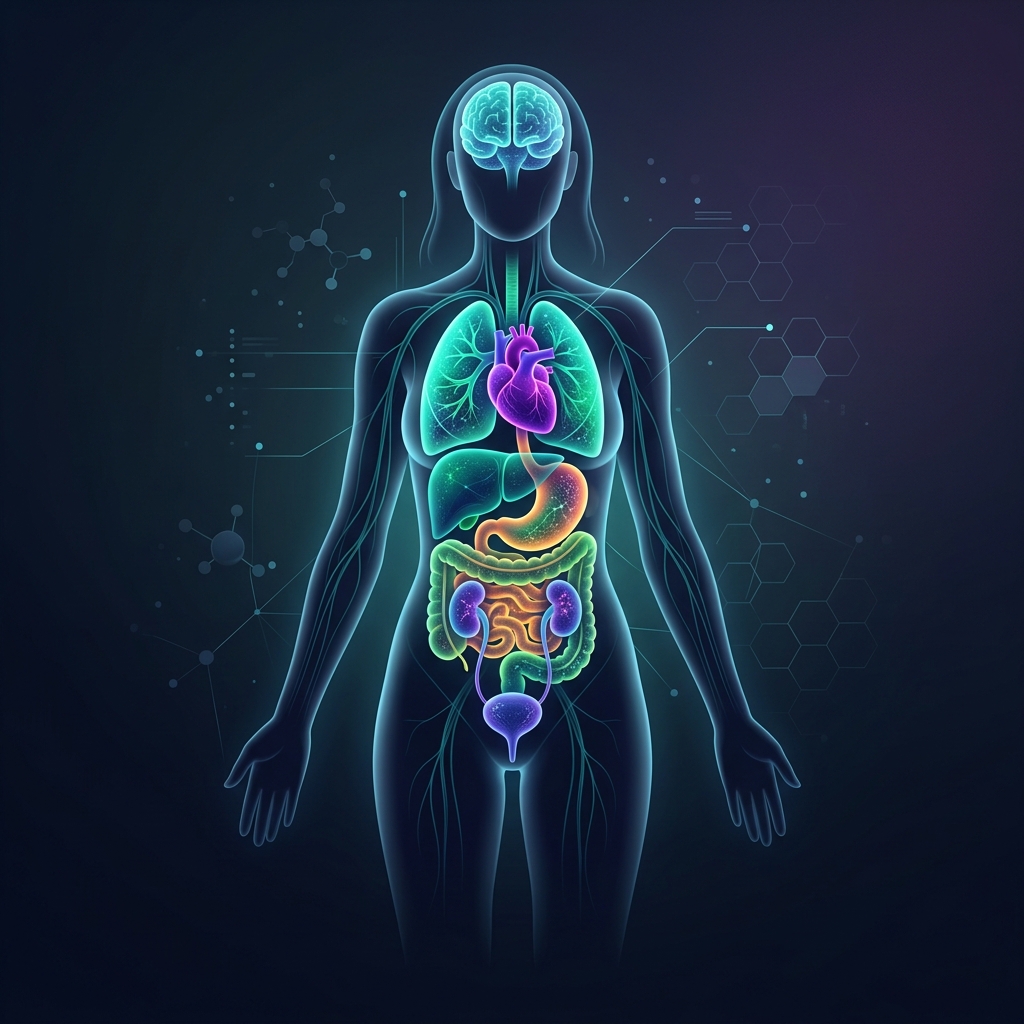
Where in your body does this gene actually matter?
Type a gene name to see which tissues in the body it's most active in. Higher bars = more activity. If you are interested or want to know about how a gene might be involved in various conditions, search it here to understand more.
This is not medical advice. Always talk to your doctor about your health.
1 Enter a gene
2 See the map
3 Find the hotspots
Try:

Enter a gene symbol above to map its expression across human tissues.

Saved Library

Access your bookmarked clinical trials, scientific literature, and supplements.

Your personal research library.
Everything you bookmark is saved here, even after you close the browser. Use it to keep track of research that matters to you.
This is not medical advice. Always talk to your doctor about your health.

Gene Decoder

See what a protein does, where it lives, and what it looks like — powered by UniProt and AlphaFold.

From gene name to 3D structure.
Type a gene name to see what protein it makes, what that protein does, and what diseases are linked to it. If you hear a gene name in a diagnosis — like BRCA1 or MTHFR — search it here to understand the basics.
This is not medical advice. Always talk to your doctor about your health.

Condition Research

Drugs, clinical trials, and genetic associations for any condition.

Research a condition from multiple angles.
Search any condition to see what drugs are available or in development, related clinical trials, and which genes are most studied in connection to it.
This is not medical advice. Always talk to your doctor about your health.

Research Radar

See what scientists are publishing right now — on any topic, explained simply.

The latest science, made readable.
Search any health or science topic and see the most recent peer-reviewed papers. Each result shows the journal, authors, how many times other scientists have cited it, and a plain-English summary.
Results come from Europe PMC, one of the world's largest scientific literature databases.

Search any science topic

See what researchers are publishing right now — from breakthrough treatments to new discoveries.

Claim Checker

Saw a health headline? Paste it here and find out what the real research says.

Read the Research.
Share a health claim you're curious about. Receive results on what the research says.
This tool finds related research — it doesn't make medical judgments.

Search any health claim

Paste a headline and see what published research exists — real journals, real authors, real citation counts.

About & Sources

How Shō works, where the data comes from, and what this tool is (and isn't).

How This Started

Shō started in May 2026, at a kitchen table, to see what Google's new science AI tools could do. Google had just released Gemini for Science — a set of skills that connect AI directly to life science databases. Those skills do the heavy lifting. Shō provides the layer on top for patients and laypeople: a plain-English interface that makes those capabilities usable by anyone, not just researchers.

Shō is a project of LINCHPIN AI Innovation Lab.

How It Works

Every tool uses AI to connect your query to real scientific databases and return the results in plain English. The data comes from the same sources used by researchers and physicians worldwide.

1 You type a gene name, drug name, condition, or variant ID.
2 AI sends your query to one or more live research databases.
3 The results are translated into plain English and displayed on your screen.

Science Chat goes a step further — it's a conversational AI chatbot powered by Google Gemini that can answer open-ended questions. Its answers should be verified independently.

Where the Data Comes From

Every tool connects to one or more of these live databases — the same ones used by scientists and physicians worldwide:

U.S. National Library of Medicine
Over 37 million published research papers. Used to check if claims about supplements, drugs, and genes are backed by real science.
U.S. National Institutes of Health
The federal registry of every clinical trial in the United States. Used to find trials by condition, drug, and location.
U.S. Food & Drug Administration
Adverse drug reactions reported by patients and healthcare providers. Shows what has been reported in real-world use, alongside label information.
U.S. National Institutes of Health
The world's largest open database of chemical compounds. Used to look up the chemical profile, 3D structure, and properties of any drug or supplement.
U.S. National Institutes of Health
Links genetic variants to known diseases. Used to explain what your DNA results mean — like whether a variant is pathogenic, benign, or uncertain.
U.S. National Institutes of Health
A federal atlas of gene expression across 54 human tissues. Used to show where in your body a gene is most active.
European Bioinformatics Institute
The international reference database for protein structure and function. Used to show what a gene's protein does, where it lives in the cell, and what diseases are linked to it.
DeepMind / EMBL-EBI
AI-predicted 3D shapes of nearly every known protein. Used to visualize what a protein looks like at the atomic level.
NIH, EMBL & industry partners
Tracks every drug in development worldwide and the genes they target. Used to find what treatments are approved and what's in the pipeline for a given disease.

How It Was Built

This site was created using AI coding tools, connected to Google's Gemini for Science skills — announced at Google I/O on May 19, 2026. Those skills connect AI directly to life science databases, including AlphaFold (a DeepMind AI model for protein structures). Science Chat uses Google Gemini to answer questions conversationally.

These capabilities exist because Google made them available to the public. Hopefully that continues.

What This Tool Is NOT

This is not a medical device and has not been reviewed by the FDA.
This does not provide medical advice, diagnoses, or treatment recommendations.
This does not replace your doctor, pharmacist, or genetic counselor.
FDA adverse event reports do not prove a drug caused a side effect.
A "pathogenic" genetic variant does not mean you have or will develop a disease.

This tool surfaces publicly available research data. It does not interpret, diagnose, or recommend. All medical decisions should involve a qualified healthcare provider.